Understanding access and sharing
Learn who can work on records, who can read them, and why access is different from permission to use material.
Communities make decisions about who should prepare archive records, who should review changes and which material can be shared.
Kiskemisowin provides separate controls for working on records and reading published material. Rights and cultural guidance explain responsibilities around using that material.
Understanding these differences helps you choose access that reflects the decisions made by the people responsible for the archive.
Who can work on records
An account lets a person sign in. The Admin workspace is where people with the necessary permissions prepare records, review changes and maintain archive information.
Permissions determine which actions an account can carry out. Entering Admin does not automatically give someone permission to edit drafts, submit changes or approve publication.
Permissions are assigned through groups, called Admin Groups in the interface. An account can belong to several groups.
These groups help organize work in the application. Their names and permissions do not establish someone’s cultural authority or standing in the community.
Who can read published records
Each record has a visibility setting that controls access to its published version.
| Visibility | Who can read the published record |
|---|---|
| Public | Anyone, without signing in. |
| Selected audiences | People signed in with active accounts that belong to at least one audience selected for the record. |
| Private | Unavailable through published reading. Authorized people can still read it in Admin. |
An audience is a set of accounts used for reading access. The same audience can be selected for several records. Belonging to an audience does not give someone editing or review permissions.
Publication does not automatically make a record public. Its visibility setting still applies after approval.
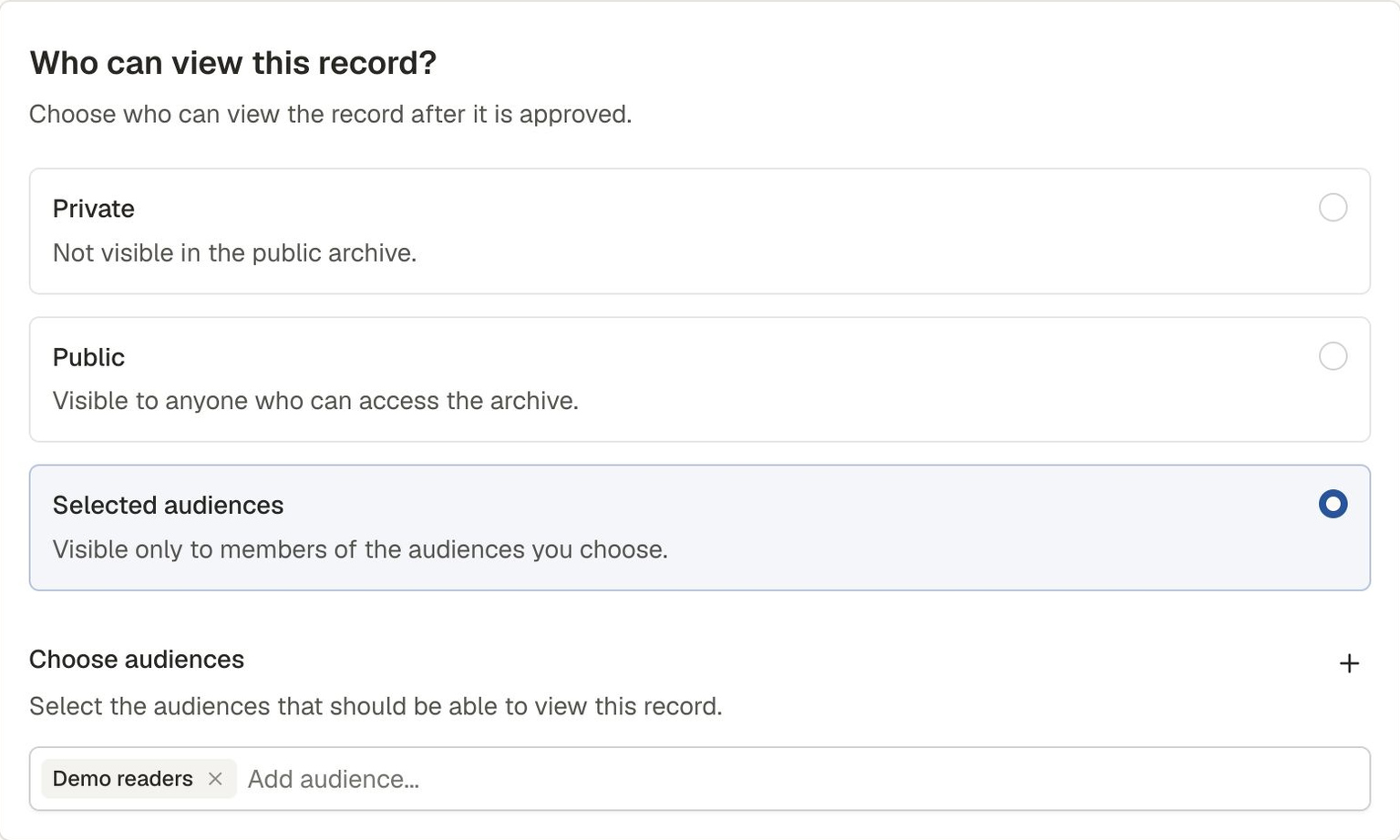
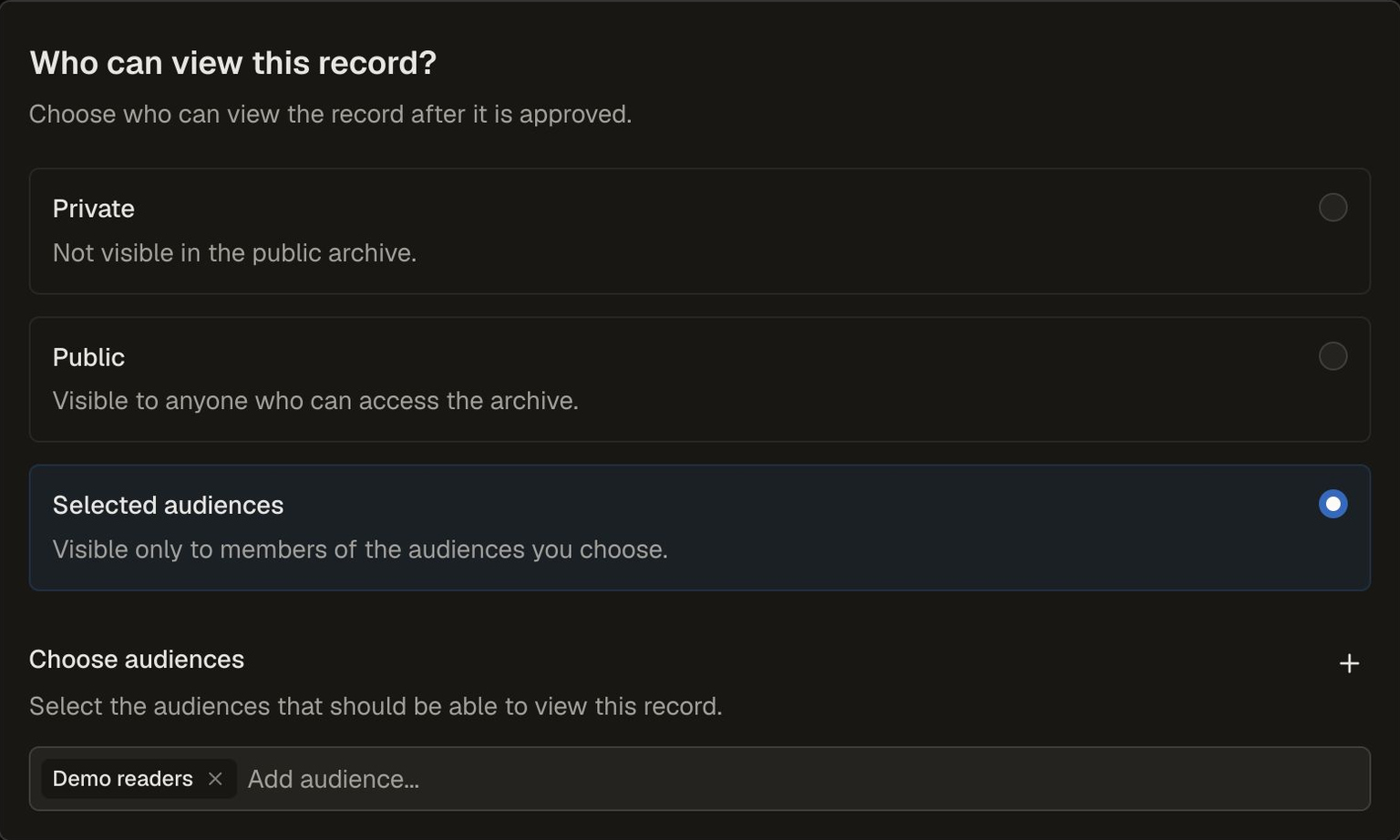
Visibility choices on a demonstration draft, with Demo readers selected. The choice applies to the published record after review approval.
These settings describe who is allowed to read a published record. Whether people can reach the installation, and which reader interfaces are available, depends on how it has been set up.
Reading in Admin is different
People with permission to enter Admin and read records can inspect private records and records for audiences they do not belong to. Reviewing submissions requires separate permissions.
Private does not mean “only the person who created the record can see it.” Audience membership does not limit which records an authorized person can read in Admin. Consider this wider access when assigning working permissions.
The published preview in Admin uses working permissions. It does not show whether a reader outside Admin would be allowed to see the record.
Credits do not give access
The Directory stores names and descriptive information for people, families, communities and organizations connected with archive material.
Adding a Directory entry or crediting someone on a record does not create a sign-in account, add them to an audience or give them permission to work in Admin.
Accounts, contributor credits, permission groups and audiences serve different purposes. A person may be credited in the archive without having an account.
Viewing and using material are different
Being able to read a record or view its files does not, by itself, establish permission to copy, reuse or share the material.
Rights information can explain what is known about ownership and permitted use. Cultural guidance can describe responsibilities and how material should be treated.
This wording does not automatically enforce a viewing restriction. Visibility settings and audience membership control published reading; working permissions control access in Admin.
Follow the recorded guidance and seek clarification from the appropriate people when permission or responsibilities are unclear.
When access changes
Changes to a record’s visibility take effect after review and approval. Audience membership changes affect later reading requests without another review of each record. See Choosing who can read records for the steps and consequences.
Where to go next
Continue with the guide that fits the work you want to do:
- Crediting people and communities explains how to acknowledge contributions and maintain Directory information.
- Managing access to the Admin workspace explains permission groups and their membership.
- Choosing who can read records explains how to set visibility and manage audiences.