Understanding archive records
Learn how descriptions, files, people and other information come together in an archive record.
A photograph or recording may leave someone with questions: Who is involved? Where did it come from? What does it mean? What should someone know before using or sharing it?
An archive record brings together information that helps answer those questions.
In Kiskemisowin, a record is called a Cultural Item. It can describe an oral history, photograph, document, physical object or other archive material.
The description and its files
A record’s title and description help people understand the material. Dates, names, languages and places can add further detail. This descriptive information is sometimes called metadata.
The digital files attached to a record are called media. They may include images, audio recordings, videos or documents.
A record can have several files. A recording, photograph and written document can sit together when they belong to the same record. Transcription or translation text can also help people understand an attached recording.
A record can describe a physical object kept elsewhere, even when there is no digital copy.
Acknowledging people and communities
Records can acknowledge the people, families, communities and organizations who contributed to the work.
Contributor credits describe what someone did, such as narrating, interviewing, photographing or translating. The same person may have different roles on different records.
Names and descriptive information are kept in the Directory, which is managed separately from individual records. Selecting an existing Directory entry connects a person or group to the record without creating their information again.
Directory entries also support other parts of a record, including sources, rights holders, cultural authorities or stewards, and transcript attribution. A Directory entry is separate from an account used to sign in.
See Crediting people and communities for instructions on adding credits and correcting Directory information.
Connecting records through shared information
Several records may refer to the same language, place or collection. Shared entries let those records use the same information consistently.
When describing a record, look for an existing entry that matches before creating another. Check that it represents the intended person, place or other information; a matching name alone may not be enough.
A shared entry identifies what the record refers to. The record can then explain the connection—for example, what a person contributed or whether a place is where the material was created or what it depicts.
Keeping the surrounding knowledge
The information around archive material can be as important as the files themselves.
A record can help explain:
- Where the material came from and how the archive received it.
- Who has owned, held or cared for it.
- Which sources support the description.
- How it connects with other records.
- What is known about rights and permission to use it.
- What cultural responsibilities or guidance apply.
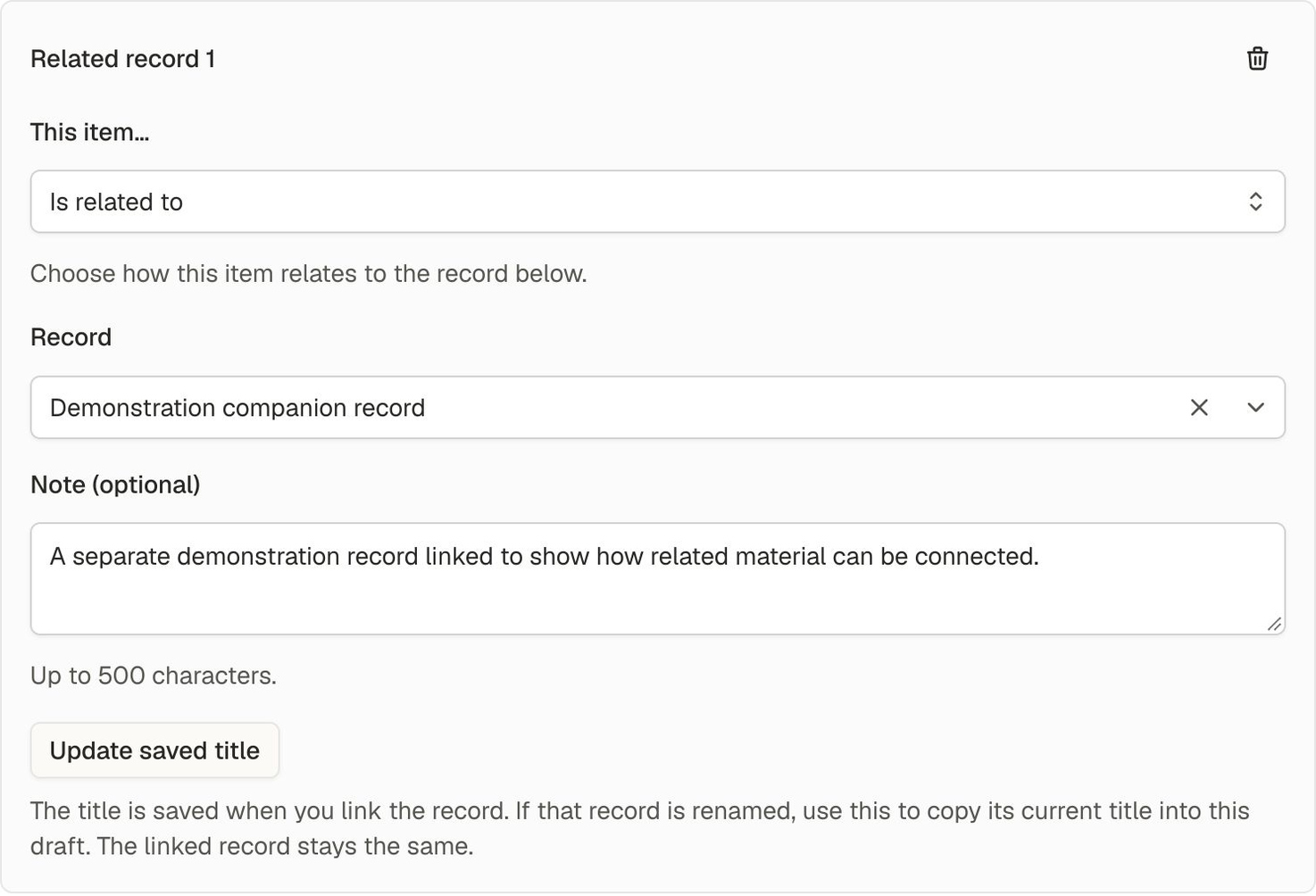
A link to a separate demonstration record, with the relationship and a note. Each record keeps its own review and access settings.
Follow the relevant community’s practices when describing material and acknowledging the people connected with it.
Rights information and cultural guidance help communicate how material should be treated. Access settings separately control who can view the record. Being able to view material does not, by itself, establish permission to reuse or share it.
Leaving room for uncertainty and correction
You may not know every name, date or detail when a record is first created. Record what is known and make uncertainty clear.
Keep an approximate date approximate. Where sources give different information, explain the differences and identify the sources where possible. Missing information should remain an acknowledged gap rather than be filled with an assumption.
Descriptions can grow as people contribute knowledge. Corrections and additional context can help later readers understand both the material and how its description developed.
Continue with How records change to learn how drafts, review and publication support that work.